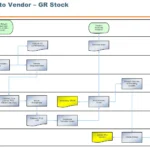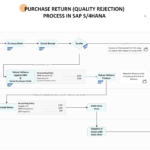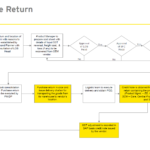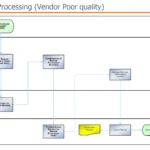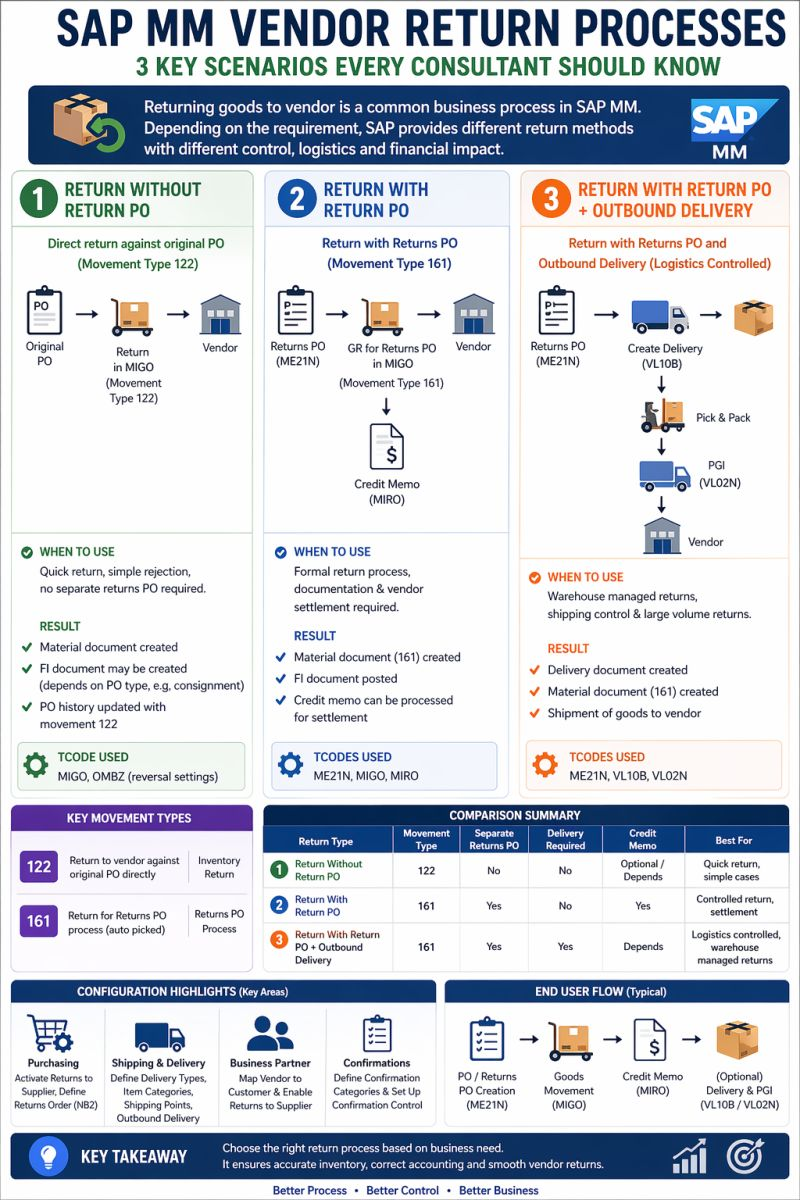
This visual presents an overview of vendor return processes in SAP MM, focusing on the most common return-to-vendor scenarios used in procurement and logistics. It explains how returned goods are handled in the system, which documents are created, and how logistics and financial postings are controlled. From this diagram, you can can clearly understand when to use each return scenario, how inventory and accounting are affected, and which SAP documents are involved from return initiation to vendor settlement.
The diagram highlights three key return scenarios that every SAP MM consultant and key user should know.
Process Flow Description in Detail
- Return Without Return PO
This scenario shows a direct return against the original purchase order. Goods are sent back to the vendor without creating a separate return purchase order.
The return is posted using a specific movement type that reverses the original goods receipt quantity. Inventory is reduced immediately, and the material document reflects the return posting.
This approach is typically used for quick and simple rejections where no formal return PO is required. Financial follow-up, such as credit memo processing, depends on the original procurement setup.
Key characteristics visible in the diagram:
- Return is linked directly to the original purchase order
- Inventory is updated immediately
- No separate return PO document is created
- Suitable for fast operational corrections
- Return With Return Purchase Order
This scenario introduces a dedicated return purchase order. The return PO is created with a return item category and serves as the formal document controlling the return process.
Goods are returned with a dedicated return movement, and the system posts the material document based on the return PO. This approach supports structured vendor communication and formal documentation.
After the return, the vendor credit memo can be processed in invoice verification.
Key characteristics visible in the diagram:
- Separate return purchase order is mandatory
- Goods movement is posted specifically for returns
- Inventory is reduced based on the return PO
- Credit memo processing is supported in invoice verification
- Return With Return PO and Outbound Delivery
This scenario adds logistics execution to the return process. In addition to the return purchase order, an outbound delivery document is created to manage warehouse activities such as picking and packing.
The return is executed through shipping, ensuring physical goods movement is tracked in detail. This scenario is commonly used in warehouse-managed or logistics-controlled environments.
Once goods are shipped back to the vendor, inventory and accounting are updated accordingly.
Key characteristics visible in the diagram:
- Return purchase order is required
- Outbound delivery controls warehouse execution
- Picking, packing, and goods issue are included
- Best suited for warehouse-managed returns
Comparison Highlights
The visual includes a comparison summary that contrasts the three scenarios based on movement type, requirement for a separate return PO, delivery requirement, and credit memo handling.
- Direct returns focus on speed and simplicity
- Return PO processes focus on control and documentation
- Delivery-based returns focus on logistics accuracy and traceability
Key Elements in the Visual
- Movement types used for vendor returns
- Material document creation during goods movement
- Integration points with purchasing, inventory management, logistics, and invoice verification
- Typical SAP transactions involved, such as MIGO, ME21N, VL10B, VL02N, and MIRO
Key Takeaways
This diagram visually explains how SAP MM supports different return-to-vendor business requirements, from quick operational corrections to fully controlled logistics-driven returns. Choosing the correct return process ensures accurate inventory updates, proper accounting treatment, and smooth vendor settlement.